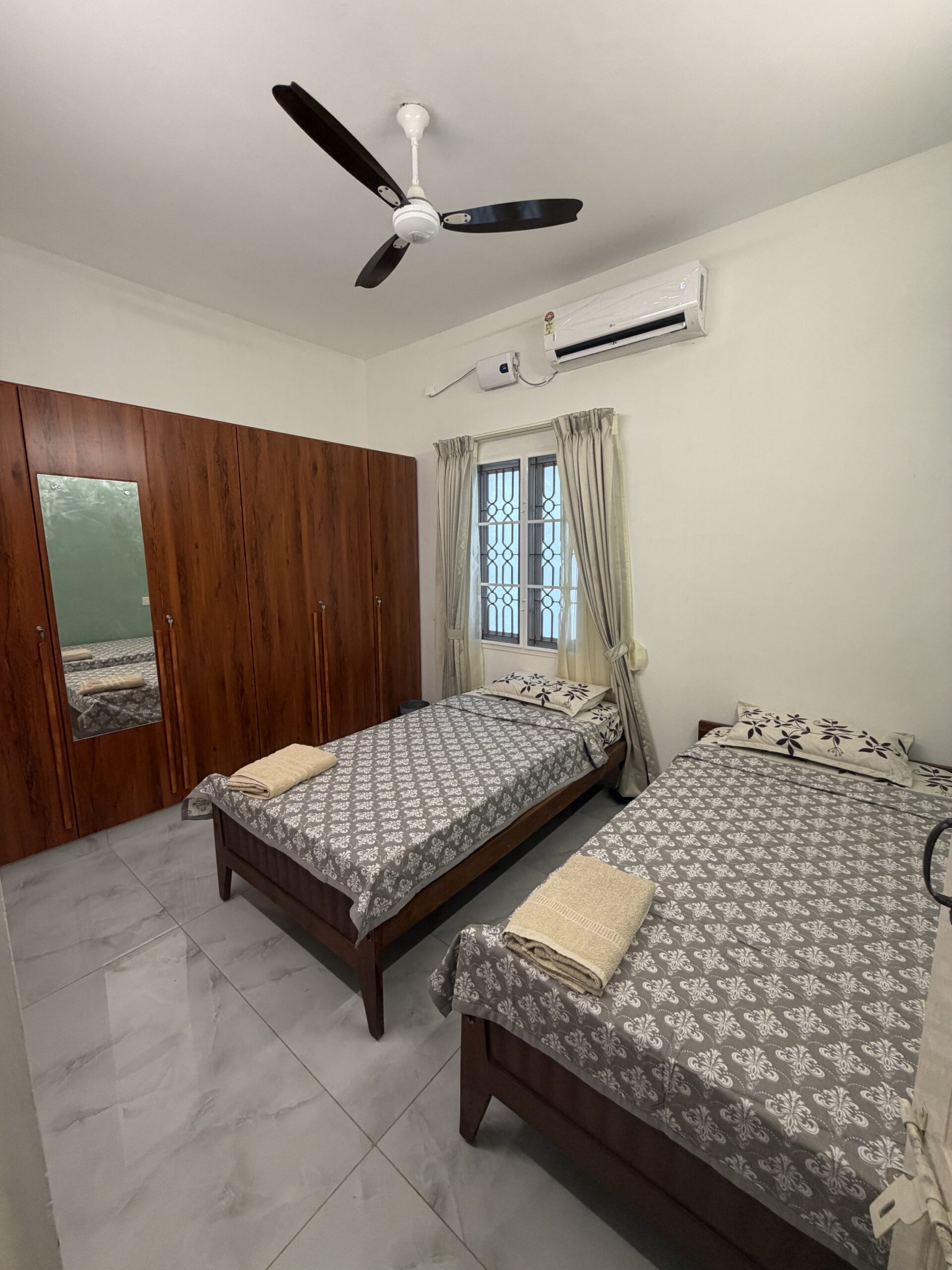
Entrusting an elderly parent or relative to a home-care service is not a simple purchase. It is an act of trust. Families hand over not only money but also the safety, dignity, and well-being of people who cannot fully care for themselves.
My experience with Anbu SriSai Home Health Care, a Tamil Nadu – Coimbatore-based home healthcare provider that presents itself with professional branding and references to ISO 9001:2015 certification, left me with serious questions about standards and expectations in parts of the home-care industry.
Professional branding, certifications, and quality labels naturally create expectations of structured training, consistent systems, and competent caregiving. Families often assume such signals represent practical standards that extend beyond marketing and documentation into everyday patient care.
My experience led me to question whether those expectations always translate into reality at the level of day-to-day service delivery.
As populations age and families become increasingly dependent on home-care services, a growing number of people are placing their trust—and often the safety of parents and grandparents—into the hands of private elderly care providers. Families often pay annual registration fees, monthly caregiver expenses, food costs, accommodation expenses, and associated charges expecting professional, compassionate, and skilled support.
But my own experience led me to ask an uncomfortable question:
Are families truly receiving professional care, or are they paying premium prices for a system that often shifts the burden back onto them?
For many families, hiring a caregiver is not a luxury. It is a necessity. Elderly individuals with mobility issues, stroke-related disabilities, dementia, chronic illnesses, and age-related dependency require more than occasional assistance. They depend on caregivers for safety, dignity, emotional support, and continuity of care.
The expectation is straightforward.
Families expect trained professionals.
Families expect accountability.
Families expect reliability.
Families expect peace of mind.
My experience raised concerns in all of these areas.
The Qualification Question: What Does “Trained Caregiver” Really Mean?
One of the first concerns involved qualifications and training.
Caregivers are often introduced as “trained” or “qualified” professionals, creating an impression that they possess structured healthcare education, practical competency, and supervised training.
However, many caregivers I encountered appeared to have completed only brief training programs lasting a few weeks to a few months.
This raises important questions:
Who determines whether a caregiver is competent?
Who assesses practical skills?
Who evaluates professionalism?
Who ensures patient safety?
Managing elderly individuals with mobility problems, feeding difficulties, dementia, fall risk, medication schedules, and emergencies requires much more than basic orientation.
Short-duration training may provide an introduction, but families naturally wonder whether it is enough preparation for the realities of elderly care.
Staff from Anbu snoring a sleeping while the elderly are left unattended.
The Missing Standard: Families Became the Trainers
Another major concern was the apparent absence of standardized and centralized practical training.
Instead of caregivers arriving prepared with patient-handling skills and familiarity with elderly care routines, much of the practical training happened at home.
Families became the trainers.
This was not merely a short orientation process.
Family members repeatedly taught:
- Medication routines
- Feeding methods
- Mobility support techniques
- Patient-specific preferences
- Sleep patterns
- Hygiene routines
- Daily care protocols
The irony was difficult to ignore.
Families paid substantial amounts expecting trained support, yet frequently found themselves teaching caregivers how to care for their own patients.
Another Staff from Anbu SriSai on the phone with elderly unattended to. Ignoring the elderly and engrossed in personal work.
The Revolving Door Problem: Train, Adjust, Repeat
Just when a caregiver finally understood the patient’s routine, another problem emerged.
They changed.
Frequent staff turnover became one of the most frustrating aspects of the process.
Many caregivers stayed for only two or three months before being replaced.
The cycle became exhausting:
New caregiver arrives.
Family starts training.
Family corrects mistakes.
Caregiver gradually learns.
Caregiver leaves.
Repeat.
Anyone caring for elderly individuals understands the importance of continuity.
Elderly patients become attached to routines and familiar faces. Constant caregiver changes disrupt emotional comfort and create anxiety both for the patient and the family.
Professionalism Matters as Much as Technical Skills
Concerns extended beyond technical skills and into professionalism.
Families expect caregivers to demonstrate:
- Responsibility
- Attentiveness
- Reliability
- Respect for privacy
- Patient-focused behavior
Instead, experiences may sometimes include:
- Caregivers unexpectedly becoming unavailable during duty periods
- Excessive phone use during working hours
- Continuous headphone use
- Loud personal conversations affecting the elderly person’s comfort
- Reduced engagement with the patient
- Differences regarding expected responsibilities
Many elderly individuals prefer quiet environments, yet prolonged personal conversations involving unrelated personal matters can become frustrating for both patients and families.
Expectations vs Reality in Daily Care
No family expects caregivers to become full-time domestic workers.
However, many families reasonably expect flexibility and assistance with small tasks directly connected to patient welfare.
Rigid interpretations of responsibility can create tension and misunderstandings.
Caregiving is not merely physical presence inside a home.
Families are paying for reliability, attentiveness, compassion, and support.
The Cost Question: Does Paying More Mean Better Care?
Financial costs also raise questions.
Families often bear significant expenses including:
- Annual registration fees
- Monthly salaries around ₹35,000 or more
- Food expenses
- Accommodation expenses
When overall costs become substantial, expectations naturally increase.
Higher costs alone do not guarantee better care.
Families are not paying simply for somebody to occupy a room.
They are paying for:
- Safety
- Competence
- Dependability
- Continuity
- Peace of mind
The Certification Question
Another issue involves understanding caregiver certifications.
Families may see certificates and naturally assume professional expertise.
Important questions need to be asked:
Is this a recognized professional qualification?
Was there practical clinical training?
Was competency independently assessed?
What exactly does the certification represent?
A certificate alone should not automatically be mistaken for expertise.
Customer Care with poor response.
Exerpts of chats below
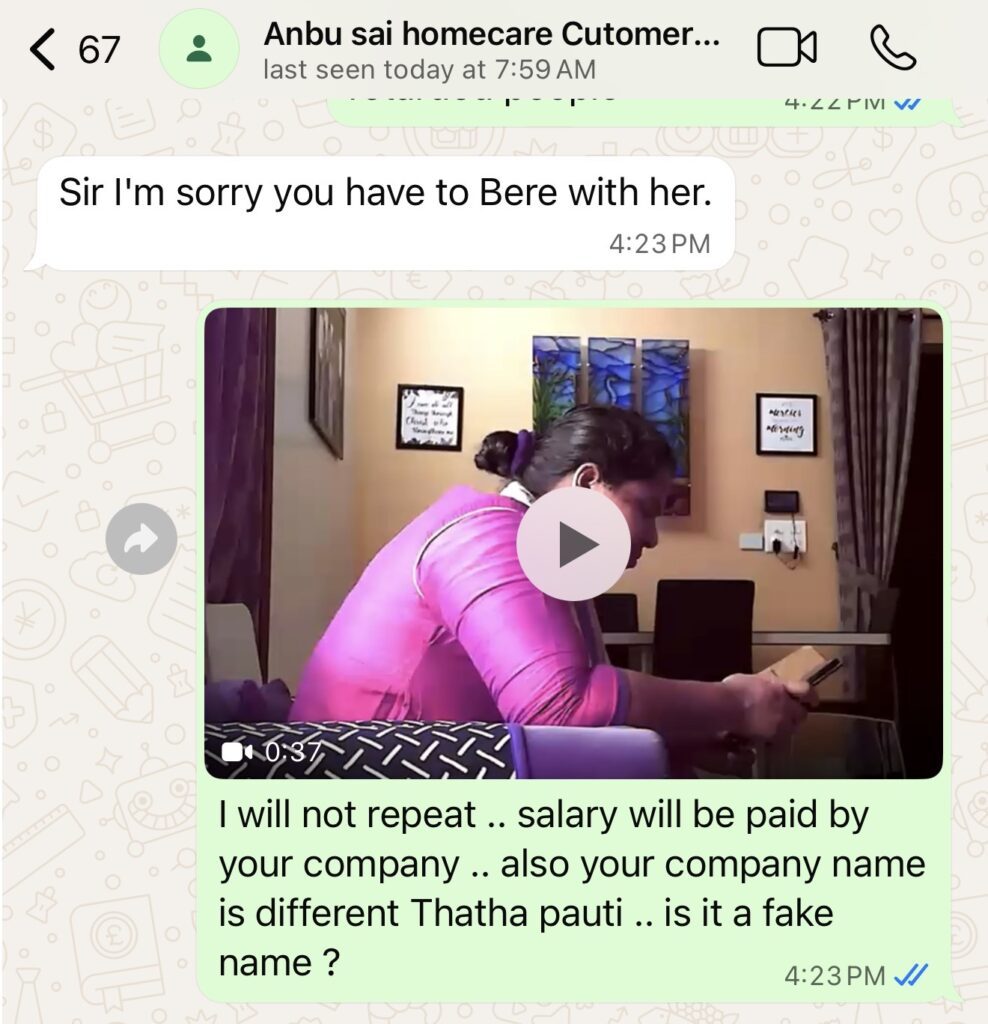
They say they are sorry that the customer will have to bear with this, however they do take a service charge of 35000/- per 10 months.
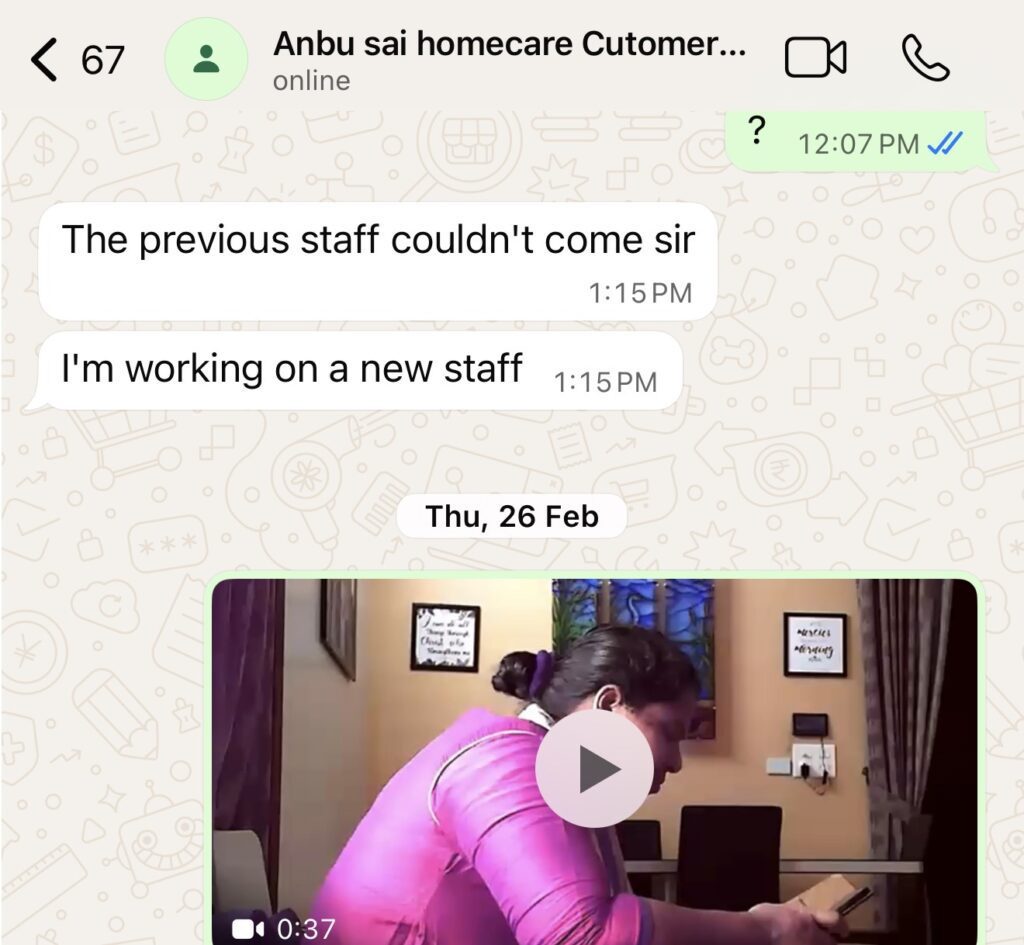
January 2026 new staff was asked for, no staff replacement for 4 months adds to the customers struggle.
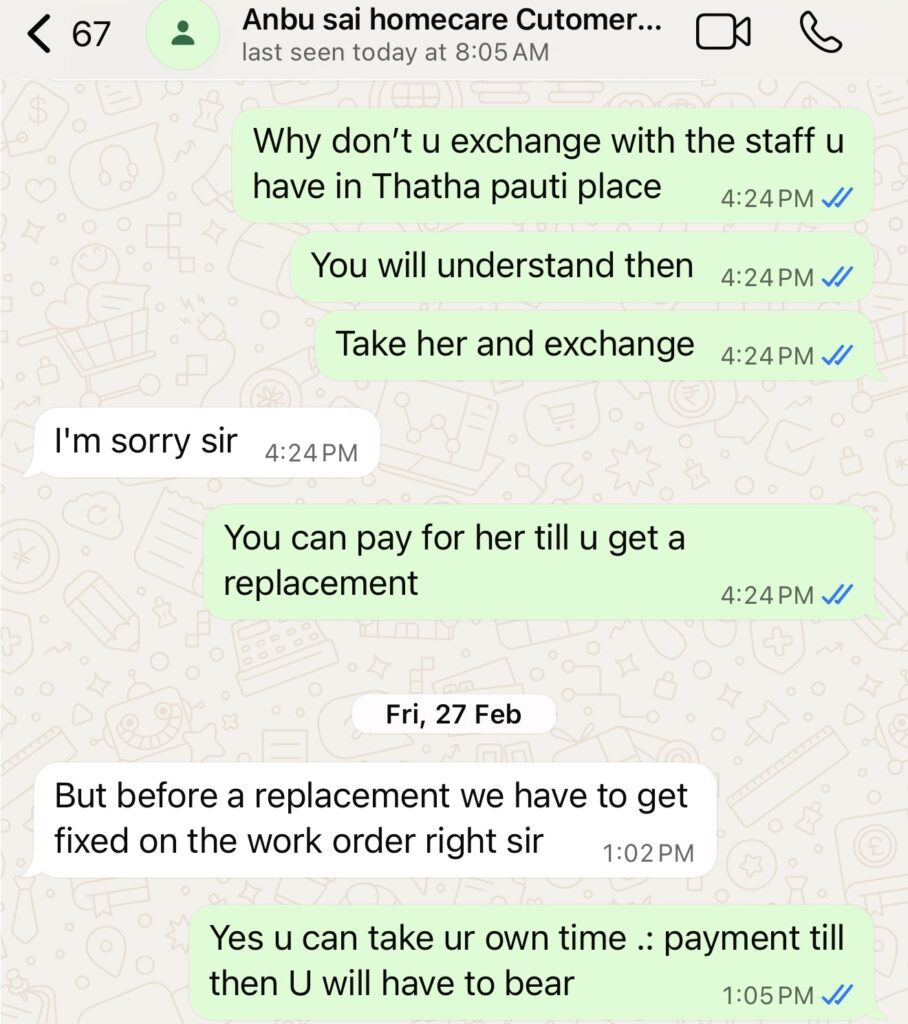
They have a subsidiary called Thatha Pauti services which looks suspicious. They do not want to exchange the “reliable staff” they have sent with their own staff. This shows their double standards about the quality of staff they send.
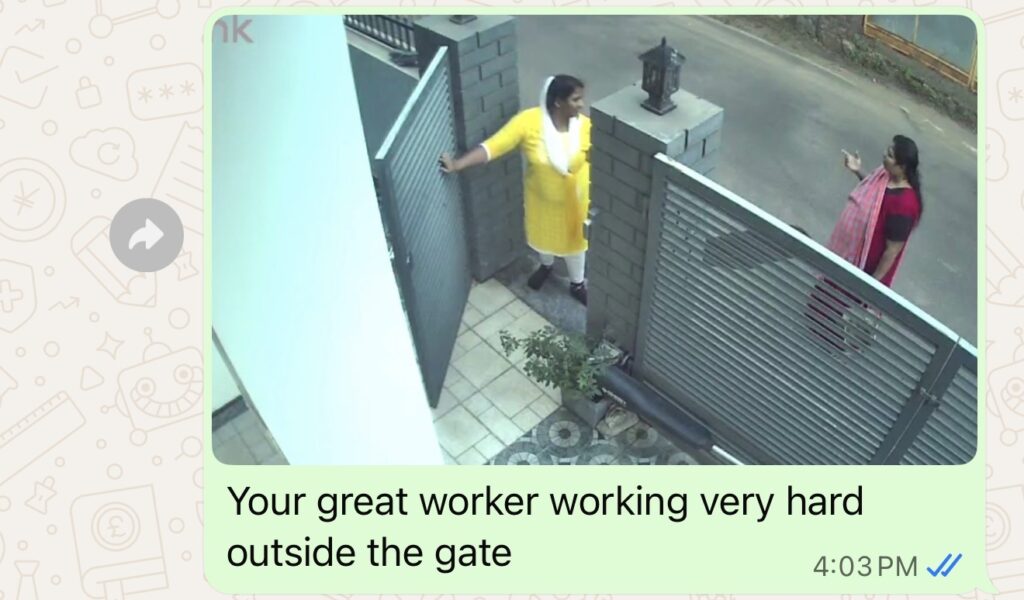
Staff seen outside the gate without informing and leaving the elderly unattanded.
What Needs to Change?
The elderly represent one of society’s most vulnerable populations.
Families should not have to become:
- Trainers
- Supervisors
- Quality inspectors
- Investigators
- Crisis managers
There is a need for stronger transparency and accountability within home-care systems, including:
- Standardized caregiver training
- Verified competency assessments
- Background checks
- Transparent disclosure of qualifications
- Regular supervision
- Better staff retention systems
- Clear accountability mechanisms
Families deserve honesty.
The elderly deserve dignity.
Caregiving should be treated as a profession built on trust—not simply a transaction built on marketing and promises.
This article reflects personal experiences and observations intended to encourage discussion regarding standards, transparency, training quality, and accountability within home-care services.